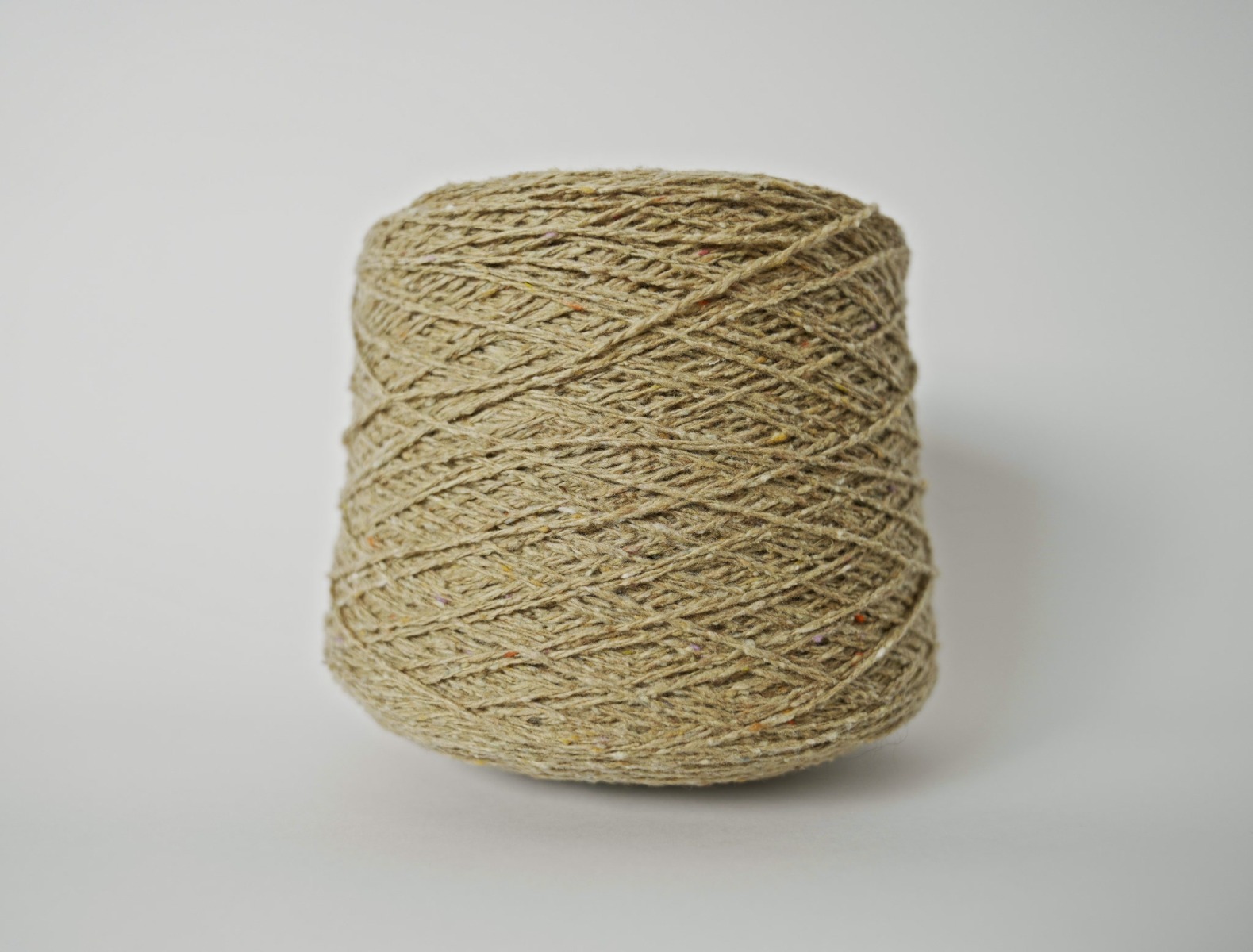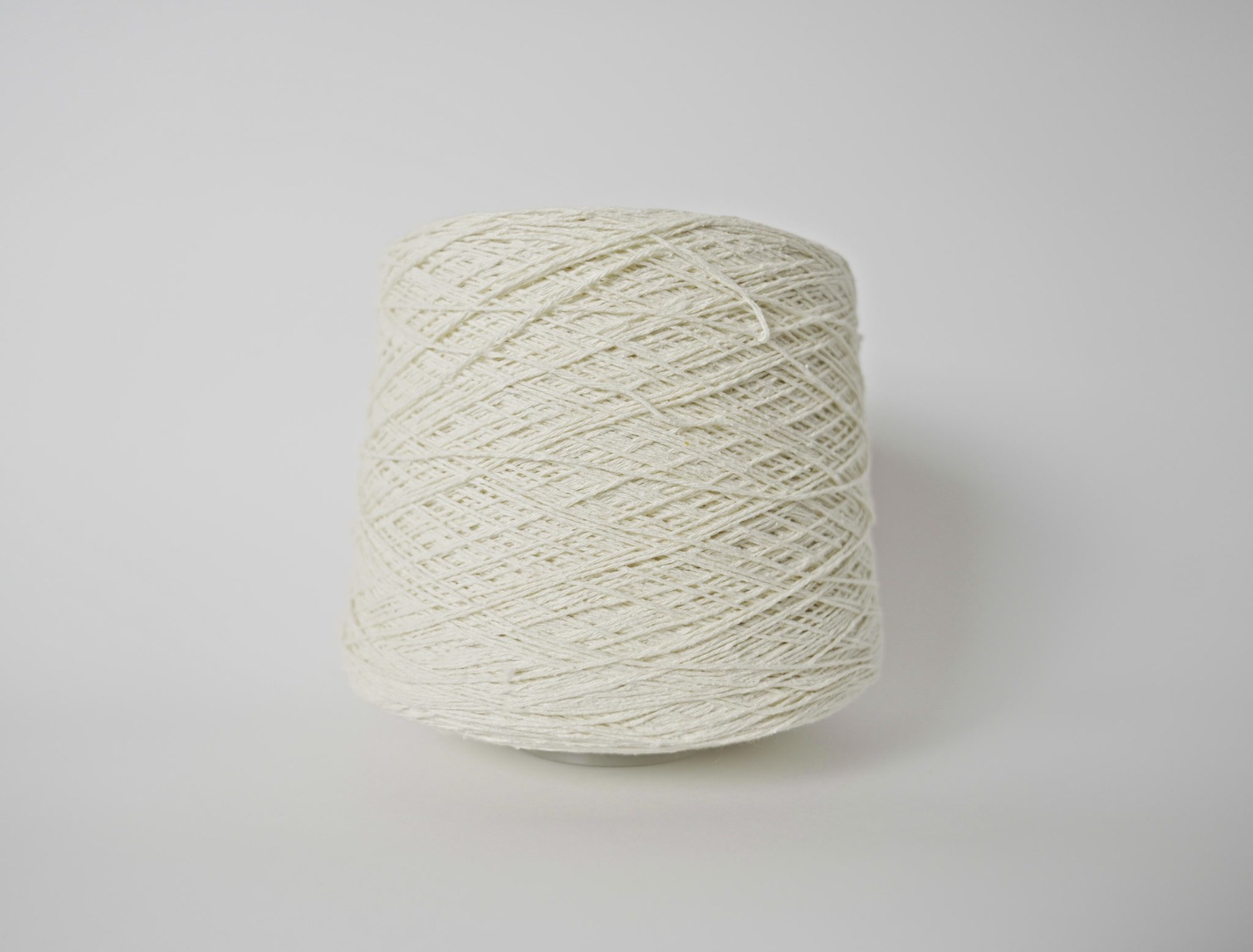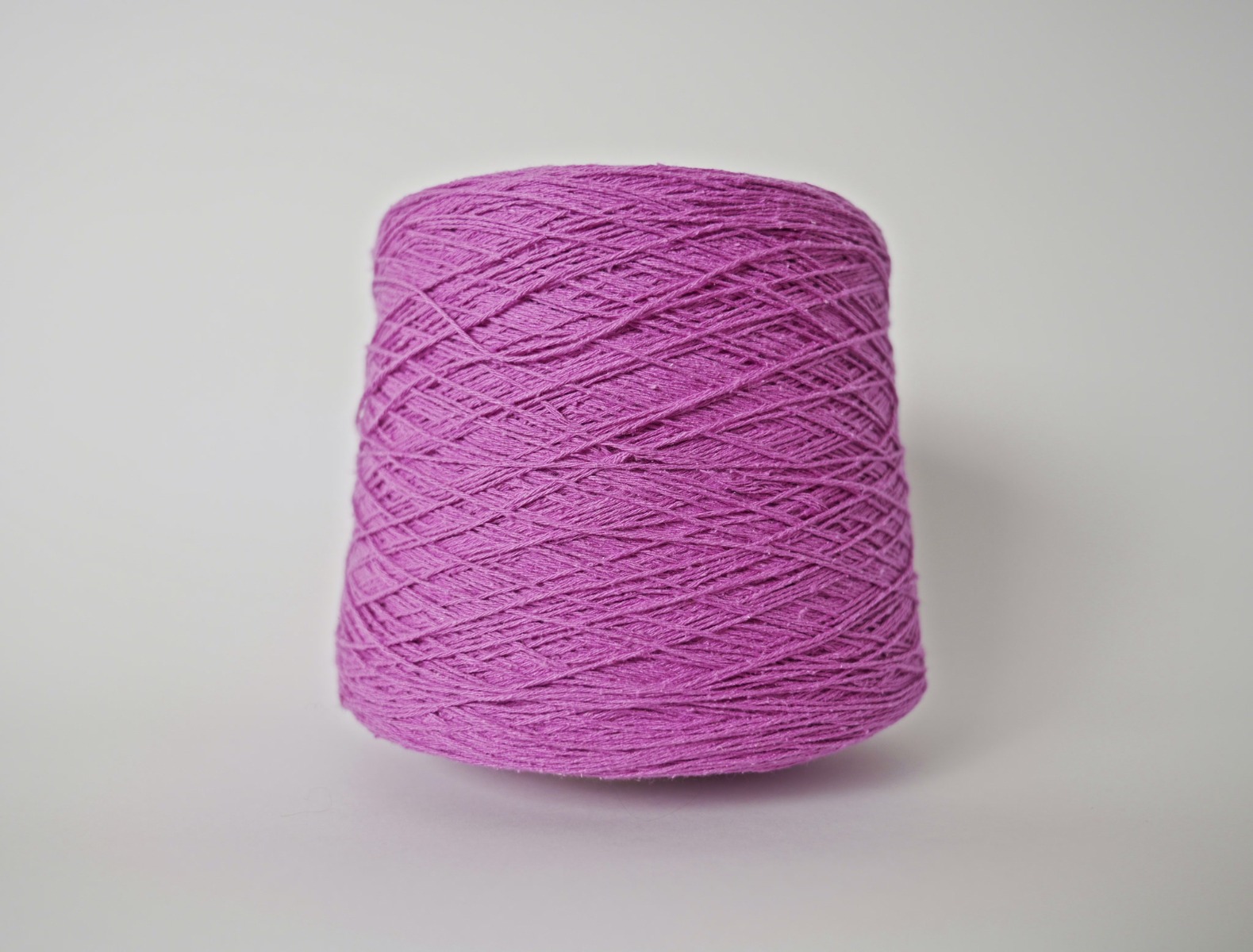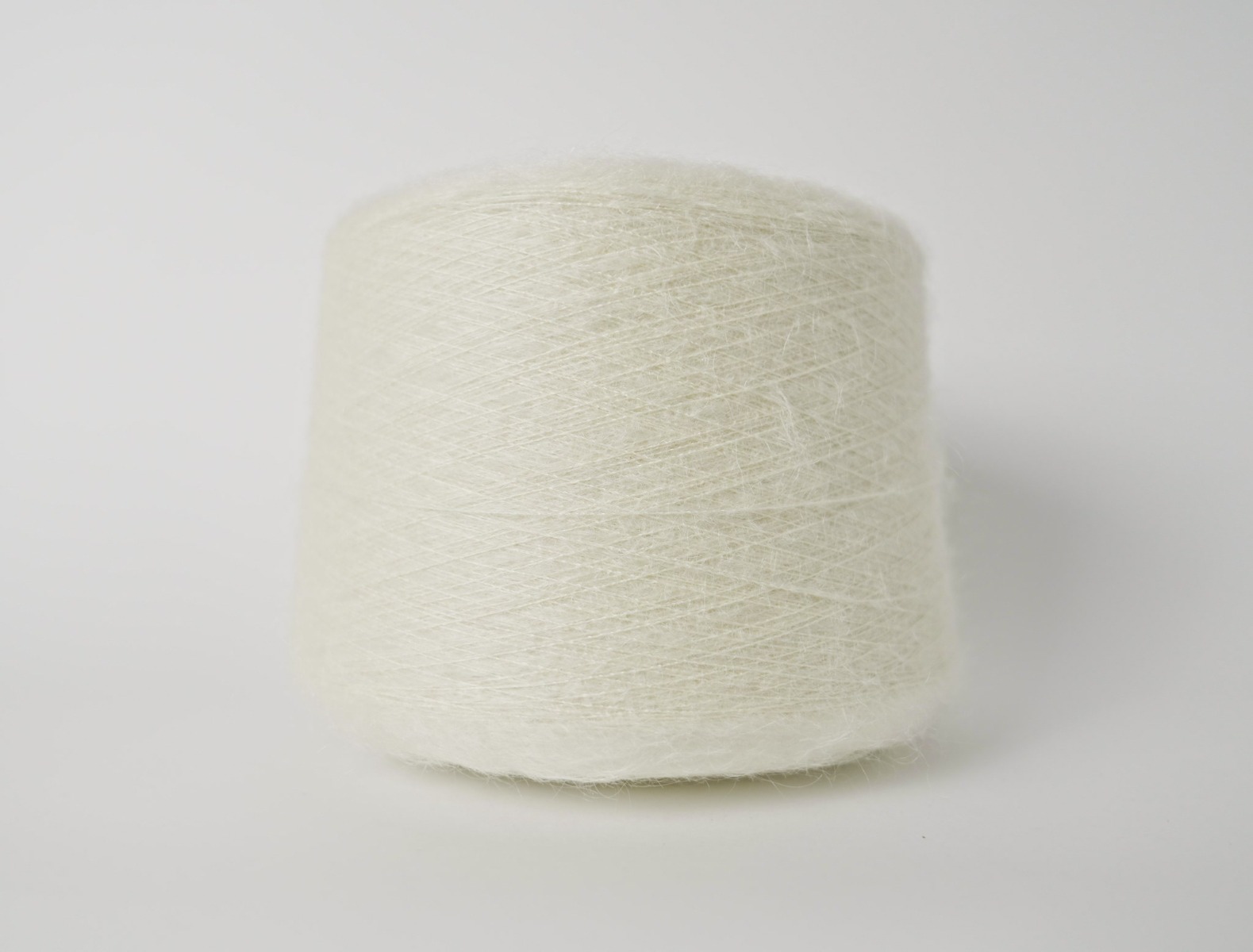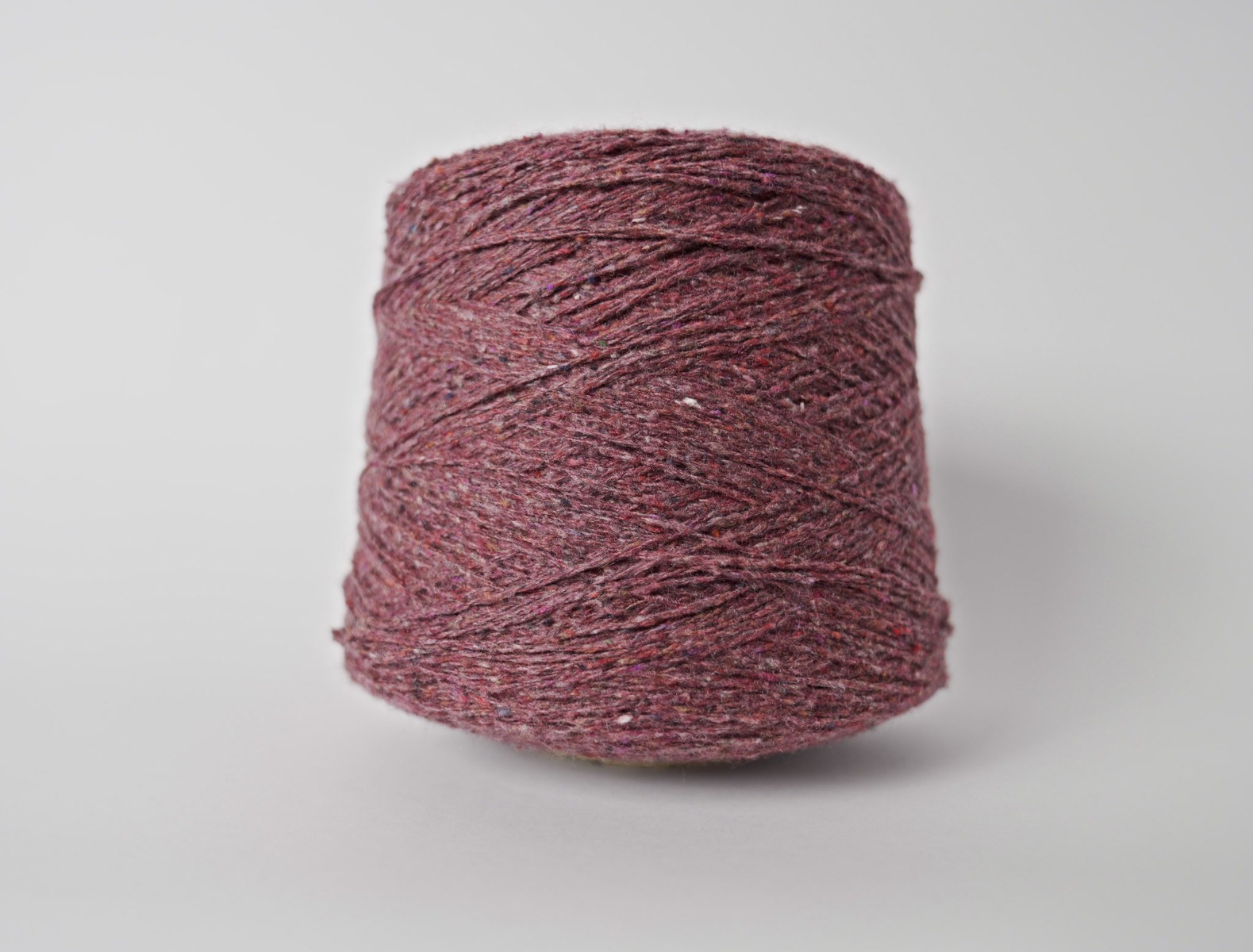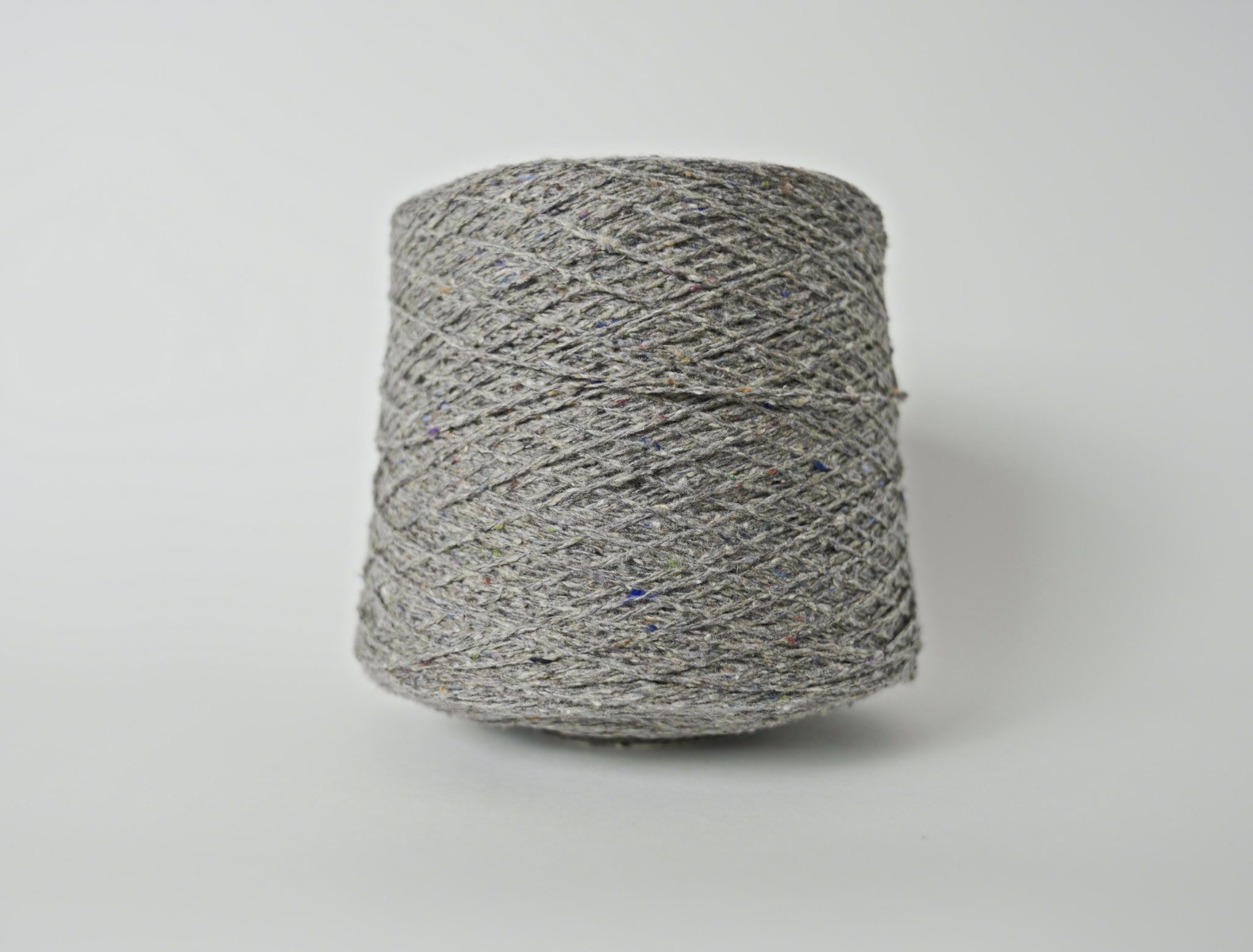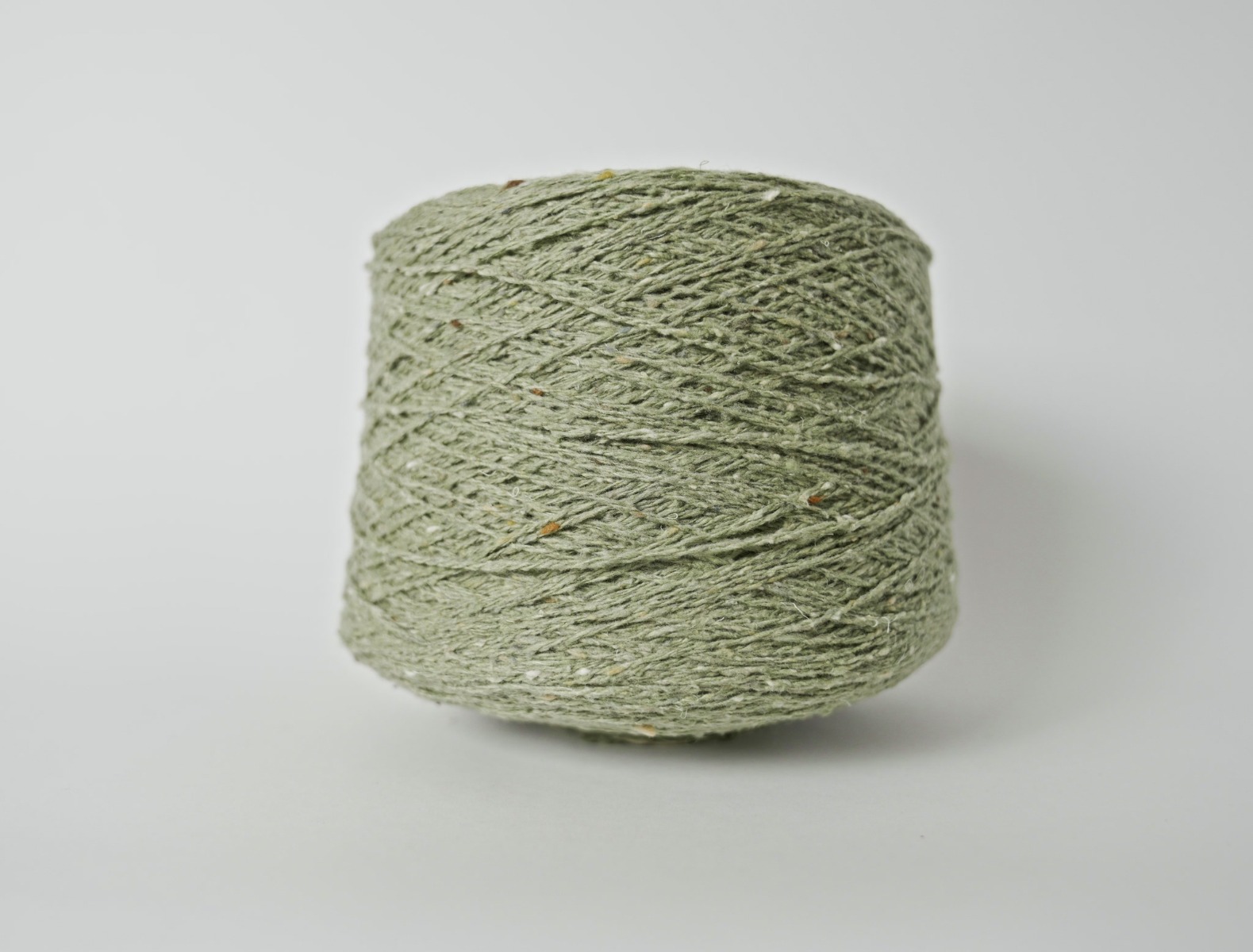


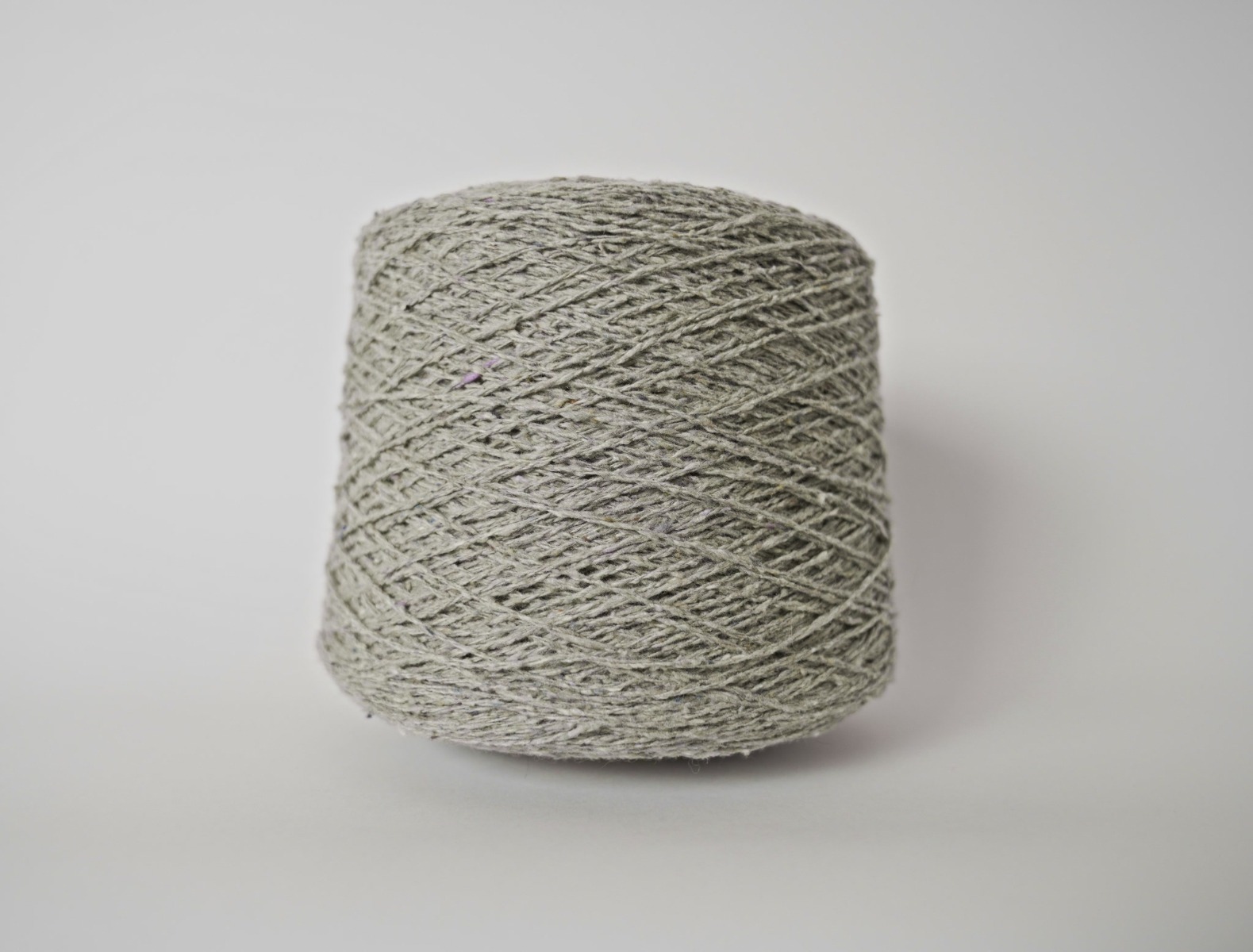
The Royal Collection Tweed - Perla
76% Cashmere, 17% Wool, 7% Silk - 300m per 100g
Explore lustrous and beautifully textured deadstock silk yarns with strength, drape and elegant movement.
Silk is strong, lightweight and naturally temperature regulating, creating fabric with beautiful drape. Our limited deadstock selection can include smooth, luminous silk as well as textured seta bourette and luxury blends. Smooth filament silk has the familiar polished sheen associated with elegant tops, shawls and refined accessories. Silk bourette is spun from shorter silk fibres, giving it a more matte surface, subtle texture and relaxed, organic character.
Blending silk with other fibres changes the finished fabric. Cashmere adds warmth and softness; wool contributes elasticity and shape retention; linen adds structure and a dry summer handle. These qualities make silk yarn useful far beyond special-occasion pieces, from lightweight warm-weather garments to layers that can be worn throughout the year.
Use metres per 100g and a washed swatch to compare silk yarns, because fibre construction affects how fine yarn behaves. Silk tends to become more fluid after washing, and a blend may bloom differently according to its other fibres. Treat the swatch exactly as you intend to treat the finished garment, allow it to dry fully, and only then assess gauge and drape. Quantities are limited, so order the full project meterage wherever possible. Explore the differences between glossy silk and bourette in our guide to summer yarns.
Glossy silk uses long filaments for a smooth, luminous surface. Bourette uses shorter silk fibres, producing a matte, softly textured yarn with a more rustic appearance.
Yes. Silk is lightweight and temperature regulating, with excellent drape. Its exact feel depends on the yarn construction and any fibres blended with it.
Yes. Washing and blocking reveals the finished drape and helps you measure an accurate gauge before committing to the garment.