


A Guide to Summer Yarns: Luxury Deadstock Cone Yarn for Beautiful Warm-Weather Knitting
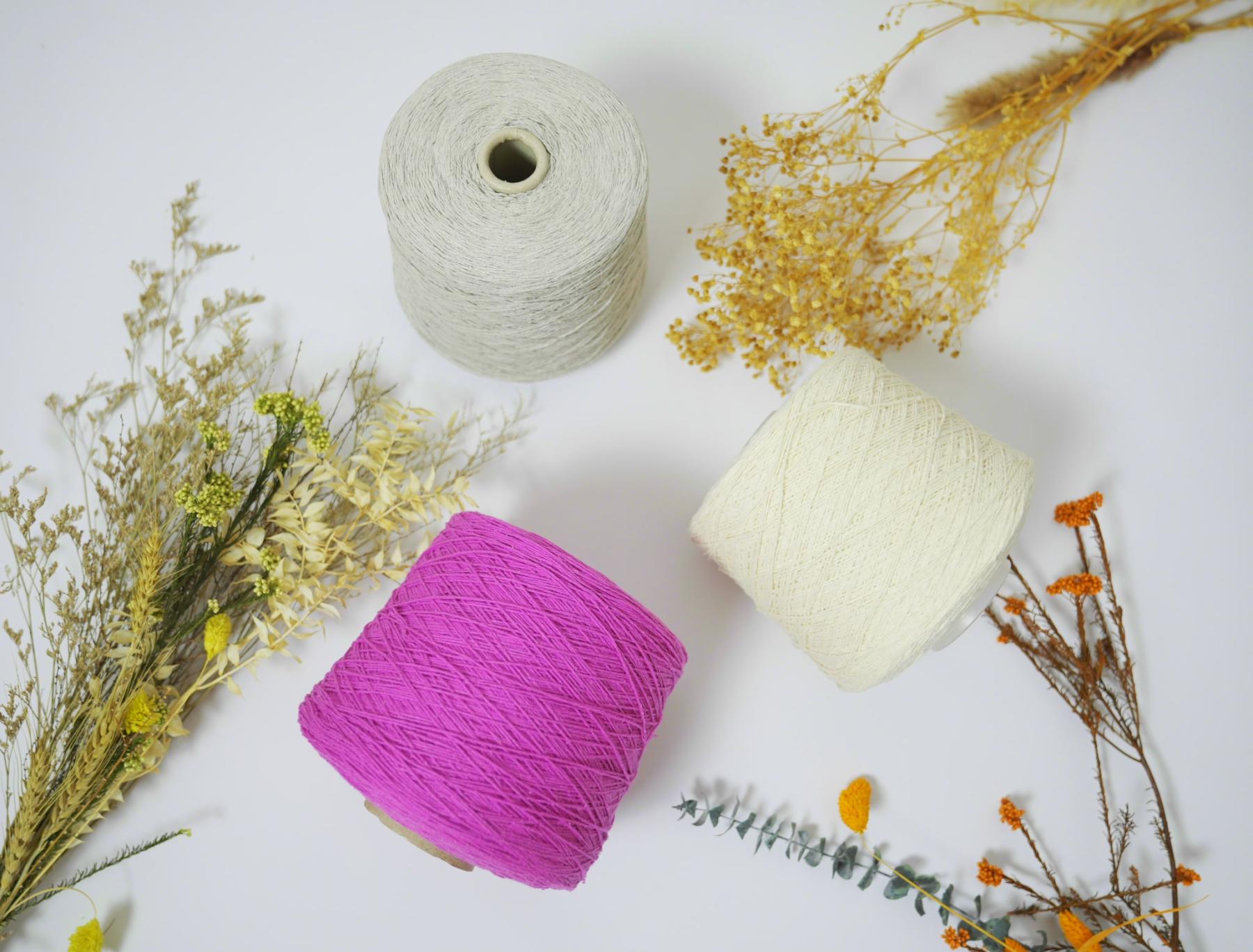
Warm-weather knitting begins with fabric, not season. A light summer garment needs breathable fibres, an appropriate yarn construction and enough space between stitches for air to move. Deadstock cone yarn can be particularly useful because fine industrial yarns let you control the finished weight by knitting one strand or combining several.
This guide looks at linen, silk, cotton, viscose, fine merino and luxury blends, with practical advice for selecting and swatching deadstock yarn for tops, cardigans, scarves and other warm-weather projects.
What makes a yarn suitable for summer?
Fibre matters, but it is only one part of the result. A loosely knitted wool fabric may feel more comfortable than a dense cotton fabric. Consider all of the following:
- Breathability: how easily air moves through the finished fabric.
- Moisture behaviour: how the fibre absorbs, releases or holds moisture.
- Drape: whether the fabric falls fluidly or holds a firmer shape.
- Fabric density: the relationship between yarn thickness, needle size and gauge.
- Garment design: ease, sleeve length and layering affect comfort as much as fibre choice.
Linen yarn
Linen is strong, breathable and naturally crisp. It may feel firm on the cone or during knitting, then relax and develop more drape through washing and wear. Linen works well for open cardigans, simple tops, shawls and structured summer accessories.
Because linen has less elasticity than wool, use a relaxed grip and avoid judging the yarn before washing the swatch. A linen-and-cashmere or linen-and-silk blend can combine coolness and structure with a softer handle.
Silk yarn
Silk adds strength, lustre and fluid drape. Smooth spun silk and textured bourette silk create very different fabrics, so check the yarn construction as well as the fibre label. Silk can be beautiful in tops, scarves and garments designed to hang cleanly from the shoulders.
Silk can grow under its own weight. Wash the swatch, let it dry fully and measure it both before and after gently hanging it. This is especially useful when planning a long garment.
Cotton and viscose yarn
Cotton creates a familiar, breathable fabric with clear stitch definition. Viscose often adds softness, sheen and movement. Both have less natural bounce than wool, and heavy fabrics can stretch vertically, so a lighter gauge is often preferable for garments.
Fine merino and luxury blends
Wool is not limited to winter. Fine merino knitted into a light, open fabric can be comfortable across changing temperatures and is useful for travel or evening layers. Cashmere, silk and linen blends can also work for lightweight pieces when the yarn is fine and the fabric is not dense.
Mohair-and-silk yarn produces a light fabric with warmth and halo. It is better suited to an airy evening layer than to the hottest part of the day.
Why cone yarn is useful for lightweight knitting
Industrial cone yarn is commonly described by metres per 100g or a metric yarn count. A fine yarn gives you flexibility: knit one strand for a very light fabric, or hold two or more strands together until the washed swatch has the weight and coverage you want.
Do not assume that combining two strands will reproduce a standard retail yarn exactly. Twist, fibre and construction all influence the result. Let the washed fabric decide.
A reliable summer-yarn swatching process
- Choose the fibre and approximate fabric weight for the project.
- Knit a generous swatch using one or more strand combinations.
- Wash the swatch using the care method intended for the garment.
- Dry it fully without forcing it into shape.
- Measure gauge, then assess transparency, drape, softness and weight.
- For silk, viscose or linen garments, observe whether the swatch grows vertically.
How much yarn should you buy?
Calculate by total meterage, not only by cone weight. Use the washed gauge and the requirements of a comparable pattern as a starting point. Include yarn for swatches and a margin for finishing. Because a deadstock lot is finite, replacing the exact colour later may not be possible.
For more detail on washing, strand combinations and industrial yarn counts, read How to Work With Deadstock Cone Yarn.
Explore current summer yarns
The Pure Light Fiber collection changes with each available deadstock lot. Browse linen, silk, cotton, viscose, fine merino and lightweight luxury blends in CHF, USD or EUR, with international delivery available.