


Cashmere Yarn on Cones vs Balls: How to Compare Cost and Choose for Your Project
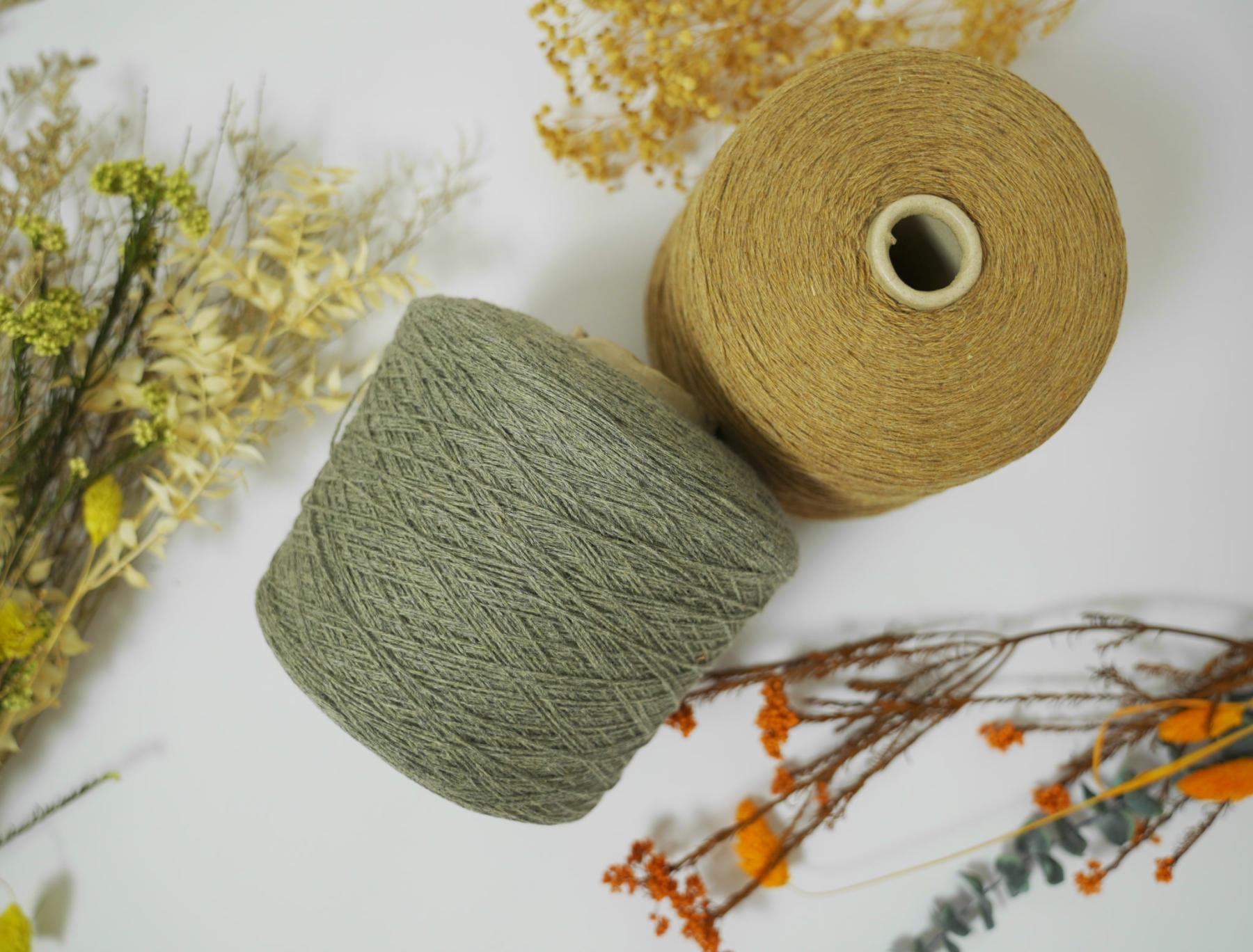
A 25g ball of cashmere can look like a small indulgence. Multiply it by the number of balls needed for a sweater, however, and the project budget changes quickly. A cone offers a different way to buy luxury yarn, but its larger size and fine yarn count can make the comparison confusing.
The useful question is: what will it cost to knit the fabric you actually want? Compare fibre content, usable length, washed gauge and the quantity you must buy. Here is how to make that comparison before choosing cashmere yarn for your next project.
What changes when cashmere comes on a cone?
A cone is a way of winding yarn, not a quality grade. Cashmere on cones may have been prepared for industrial knitting, while retail balls are often packaged and labelled for hand knitting. Either can produce beautiful fabric when its construction suits the project.
Some cone yarn is sold as deadstock yarn: unused stock left after a production run, a cancelled order or a discontinued colour. These limited lots can offer good value, but the same shade or yarn may be difficult to find again.
A cone may give you a long stretch of yarn between joins. It may also require more preparation: interpreting the label, combining fine strands, and testing how the fabric changes after washing. Check the individual listing rather than assuming every cone behaves the same way.
Compare price per 100g first
Package prices are misleading when one yarn is sold in 25g balls and another in a 250g cone. Put both on the same basis:
Price per 100g = package price ÷ net yarn weight in grams × 100.
Use the weight of the yarn itself, excluding the cardboard or plastic cone. Also check whether the displayed shop price is for the whole cone, a cake, or a specified weight.
The following figures are an illustration only, not current shop prices. Assume both yarns are 100% cashmere, with a comparable construction and an effective length of 400m per 100g.
| Comparison | Retail ball | Cone |
|---|---|---|
| Package weight | 25g | 250g |
| Package price | €12 | €60 |
| Usable length | 100m | 1,000m |
| Price per 100g | €48 | €24 |
| Price per 100 usable metres | €12 | €6 |
In this example, the cone costs half as much per 100g. That does not mean all cone cashmere is half the price of retail yarn: fibre composition, construction, seller and available quantities all affect the result.
Fine yarn needs a second calculation
Price per metre helps only when the metres are comparable. A very fine cone yarn can contain far more length per 100g than a thicker retail yarn, but you may need several strands held together to create your intended fabric.
For example, yarn labelled 1,600m per 100g, held with four identical strands together, gives approximately 400m of combined working yarn per 100g. You divide the single-strand length by four; you do not get 1,600m of sweater-weight fabric from that 100g.
Price per 100 usable metres = package price ÷ effective working length in metres × 100.
If you are combining fine yarns, our guide to holding yarn double or triple explains the next steps. Length is a useful starting point, but it cannot replace a washed gauge swatch.
Calculate the amount you must actually buy
Suppose your chosen sweater needs 1,200m of working yarn at the gauge achieved with the yarns in the example above. That is 300g at 400m per 100g, before adding your allowance for swatching and adjustments.
- 25g balls: twelve 100m balls would provide 1,200m and cost €144.
- 250g cones: if only whole cones are available, you would need two 1,000m cones, costing €120 and leaving 800m before swatching.
The cone has half the unit price, yet the initial purchase saves €24 rather than €72 because you must buy more yarn than the sweater uses. If smaller quantities are available, the calculation changes again.
For a small accessory, one or two retail balls might mean a lower initial spend. For several projects, a larger cone may be easier to use fully. Add delivery charges and any applicable import costs to both options, using the same currency.
Check composition and washed fabric before committing
Compare 100% cashmere with 100% cashmere, or account for the difference when evaluating a blend. A cashmere-and-wool yarn, a brushed yarn and a smooth plied cashmere yarn can have very different drape, stitch definition and durability even at similar lengths per 100g.
Some industrial cone yarns retain processing oils or finishes. The unwashed yarn may therefore feel different from the finished fabric. Follow the supplier's care guidance, knit a generous swatch using your intended strand count, wash it appropriately and let it dry fully before measuring gauge.
Check softness, growth or shrinkage, drape and stitch definition. If you plan to mix colours, test them together for colour transfer. Avoid treating vigorous washing as a shortcut to softness: cashmere needs careful handling, and the correct treatment depends on the yarn.
For the full pattern-matching process, see How to Substitute Cone Yarn in Any Knitting Pattern.
Watch: cashmere cones compared with retail balls
In our video, You’re Overpaying for Cashmere Yarn (Cone vs Balls), Gabriela compares cone cashmere with retail 25g balls and explores how washing changes the yarn. It is a useful companion to the calculations above. Prices and availability discussed in the video reflect that comparison at the time of filming.
Watch the cashmere comparison on YouTube.
A quick checklist for choosing cashmere yarn
- Confirm the fibre percentages, net yarn weight and length.
- Work out effective length if you will hold multiple strands together.
- Compare price per 100g, per usable metre and for the whole project.
- Check the washed gauge and fabric against your pattern.
- Buy enough of the same lot, including a sensible allowance for swatching and changes.
- Choose a quantity you can use, especially when a deadstock shade cannot be reordered.
The best value is yarn that works for your project and gets knitted. Explore our current deadstock yarn collection to compare cashmere and luxury blends by their individual specifications, then use a washed swatch to make the final choice.