


How to Read Cone Yarn Labels: NM Count, Fiber Codes, Meterage, and Spinning Oils Explained
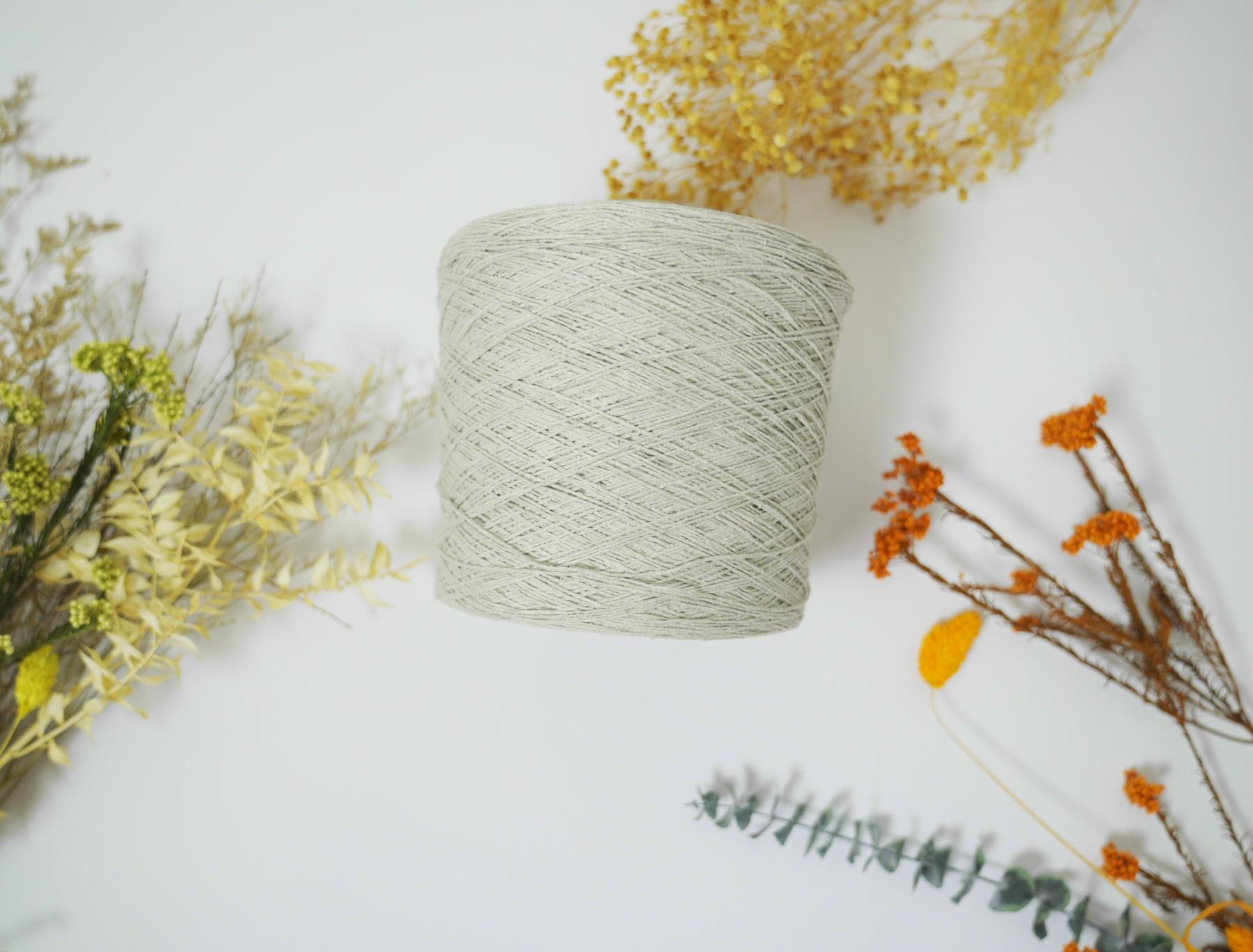
A cone yarn label can look more like a factory code than a knitting label. Instead of familiar terms such as fingering, DK, or worsted, you may see an NM number, abbreviated fiber names, a lot number, and a weight. Once you know what each part means, however, the label gives you nearly everything you need to plan a project confidently.
This guide explains how to read cone yarn labels, calculate meterage, understand common fiber codes, and decide whether a yarn needs washing before you knit with it.
What information is usually on a cone yarn label?
Labels vary between mills, but most industrial and deadstock cones include some combination of the following:
- Yarn count, often written as NM followed by one or two numbers
- Fiber composition, sometimes written with abbreviations
- Net weight of the yarn on the cone
- Color or shade number
- Dye lot or production lot
- Mill, article, or quality code
- Finishing information, including whether spinning oil may still be present
Not every label includes every detail. With deadstock yarn, original labels may also be incomplete or handwritten. The yarn count, fiber composition, and cone weight are the most useful pieces of information for knitters.
How to understand NM yarn count
NM means “number metric.” It tells you how many 1,000-meter lengths of yarn weigh one kilogram. In simple terms, a higher NM number means a finer yarn.
- NM 2 = approximately 2,000 meters per kilogram
- NM 8 = approximately 8,000 meters per kilogram
- NM 15 = approximately 15,000 meters per kilogram
To calculate the approximate meterage per 100 grams, multiply the first NM number by 100. For example, an NM 8 yarn has about 800 meters per 100 grams.
What does NM 2/28 mean?
When a label contains two numbers, the first number commonly indicates the number of plies and the second indicates the metric count of the individual singles. Divide the second number by the first to find the finished yarn count.
For example: NM 2/28 = NM 14. The yarn therefore contains approximately 14,000 meters per kilogram, or 1,400 meters per 100 grams.
Mill conventions can vary, so treat this as a strong starting point and confirm it by weighing and measuring a sample whenever possible.
How much yarn is on the cone?
Once you know the finished NM count and the net yarn weight, you can estimate the total meterage:
NM count × weight in kilograms = approximate meters
An NM 14 cone containing 500 grams of yarn holds approximately 7,000 meters: 14,000 meters per kilogram multiplied by 0.5 kilogram.
Be careful to use the net yarn weight rather than the gross weight of the yarn and cardboard or plastic cone together. If the label only shows a total weight, an empty cone of the same type provides the most accurate tare weight.
Common fiber abbreviations on cone yarn
European mill labels often shorten fiber names. The exact language and abbreviation can vary, but these are some of the codes you are likely to encounter:
- WO or WV — wool; WV often indicates virgin wool
- WS — cashmere
- WM — mohair
- SE — silk
- CO — cotton
- LI — linen
- VI or CV — viscose
- PA — polyamide or nylon
- PL or PES — polyester
- PC — acrylic
- EA — elastane
Percentages next to these codes give the fiber blend. For example, “70 WV 20 WS 10 PA” means 70% virgin wool, 20% cashmere, and 10% polyamide. When in doubt, check the mill’s terminology or ask the seller to confirm the composition.
Does NM count equal knitting yarn weight?
Not exactly. NM tells you length relative to weight; it does not describe how the yarn behaves after washing. Fiber type, twist, construction, and finishing can all change the apparent thickness and resulting fabric.
A lofty woolen-spun yarn may bloom into a fuller fabric, while a smooth worsted-spun yarn with the same meterage can appear much finer. Cashmere and mohair can also develop a halo after washing. That is why a washed swatch is more reliable than trying to translate NM directly into fingering, DK, or another commercial yarn category.
What are spinning oils?
Many yarns supplied to knitting manufacturers retain a small amount of spinning or knitting oil. These lubricants help yarn run smoothly through industrial machinery. The yarn may feel firmer, flatter, or slightly waxy on the cone, and its final softness and bloom may not appear until it is washed.
This is normal for many mill cones and does not indicate poor-quality yarn. It does mean that the unwashed yarn may not show you the finished fabric accurately.
Should you wash cone yarn before knitting?
You usually do not need to wash an entire cone before knitting. Instead, knit a generous swatch, record its measurements, wash it using the care method appropriate for the fiber, and let it dry completely. This reveals:
- How much the yarn blooms or softens
- Whether the gauge changes
- How the fabric drapes
- Whether color bleeds
- How the final fabric feels against the skin
If the yarn feels unusually oily or has a strong odor, wind and wash a small measured amount first. Always choose a washing method suitable for the most delicate fiber in the blend, avoid agitation, and never assume a wool or cashmere yarn is machine washable unless the label explicitly says so.
Watch: how to read a cone yarn label
For a visual walkthrough of NM count, fiber abbreviations, and spinning oils, watch the Pure Light Fiber tutorial below.
A practical label-reading checklist
- Identify the NM count and calculate the finished count if the yarn is plied.
- Convert the NM count into approximate meters per 100 grams.
- Read the fiber abbreviations and percentages.
- Check the net cone weight and calculate the available meterage.
- Record the color and dye lot before combining multiple cones.
- Make and wash a generous swatch.
- Use the washed gauge—not the appearance of the yarn on the cone—to choose needles and plan your project.
From mill label to knitting project
Cone yarn labels become much less intimidating once you understand the basic system. NM reveals approximate meterage, fiber codes explain the blend, and a washed swatch shows how the yarn will truly behave.
When you are ready to plan a project, continue with our guides to substituting cone yarn in a knitting pattern and holding fine cone yarns together. If cone yarn is completely new to you, start with how to work with deadstock cone yarn.