


How to Choose Deadstock Cone Yarn for Your Next Knitting Project
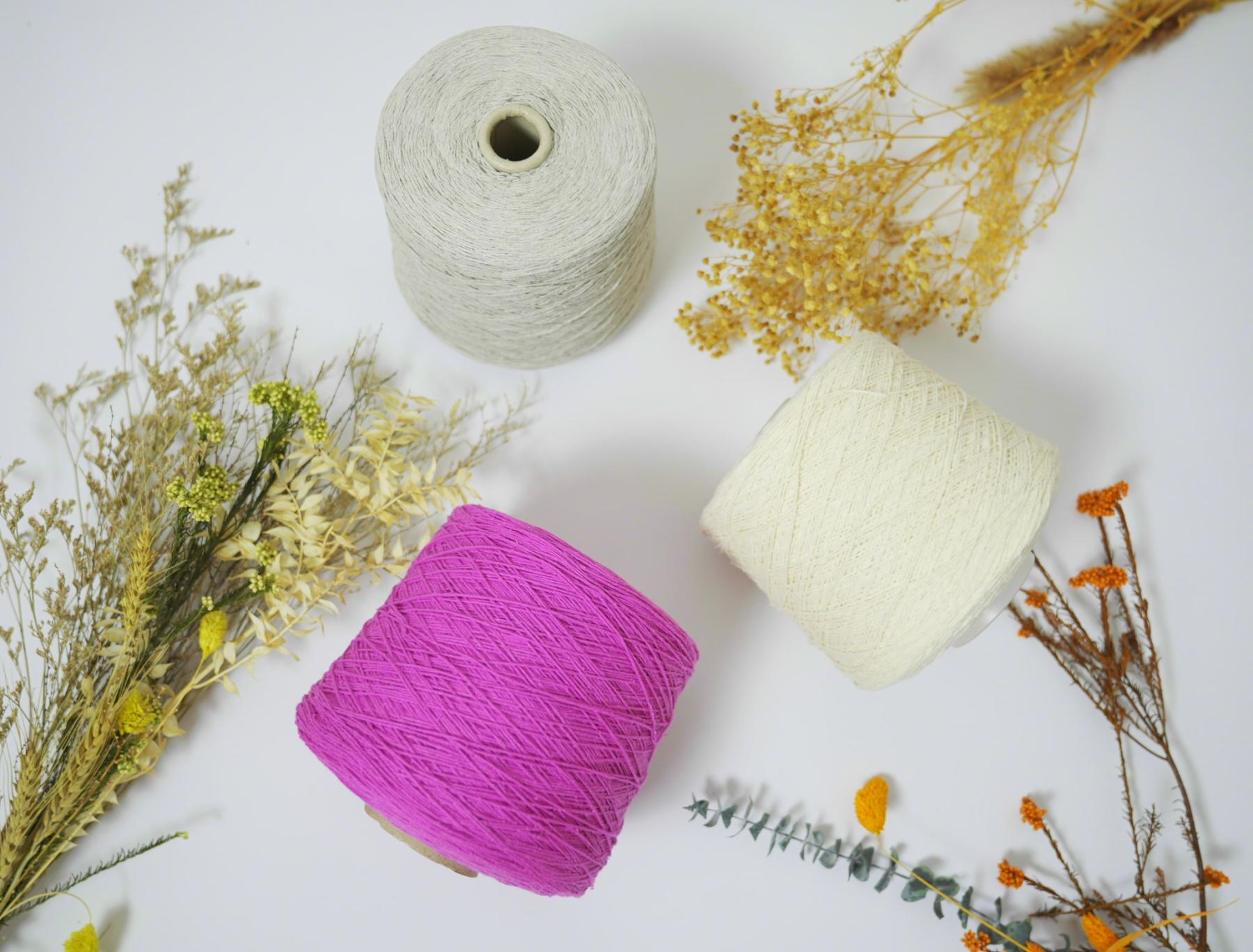
Choosing deadstock cone yarn is slightly different from buying a familiar retail skein. The label may show metres per 100g or an industrial yarn count rather than a standard weight, the yarn may change after washing, and the available lot may never return once it sells out.
Those differences are also part of the appeal. Deadstock collections can include unusual colours, fine Italian mill yarns and luxury fibres such as cashmere, silk, merino wool, mohair and linen. The key is to choose according to the fabric and project you want—not simply how the yarn looks on the cone.
Begin with the finished project
Before comparing yarn labels, define the fabric you want to make. A fitted ribbed sweater needs elasticity and recovery. A summer top benefits from breathability and drape. A scarf may prioritize softness, while a structured cardigan needs enough body to hold its shape.
Ask these questions first:
- Will the project be worn next to the skin?
- Should the fabric feel light and fluid or firm and structured?
- Does the design depend on elasticity?
- Will the garment be worn in warm, cool or changing temperatures?
- How much total meterage does the pattern require?
Choose the fibre for the fabric
Cashmere
Cashmere is warm, light and exceptionally soft. Fine cashmere cone yarn can be knitted alone for a delicate fabric or held in several strands for sweaters, hats and scarves. It often blooms after washing, so the unwashed cone does not show the final surface.
In this video, I compare cashmere yarn on cones with conventional retail balls and explain what to consider when comparing price, meterage and project value.
Merino wool
Merino offers elasticity, warmth and useful stitch definition. It is a versatile choice for sweaters, cardigans, ribbing and textured patterns. Fine merino can also create lightweight layers for transitional weather.
Silk
Silk contributes strength, lustre and fluid drape. It suits scarves, tops and garments designed to hang cleanly. Because silk can grow under its own weight, wash and measure a generous swatch before calculating the final length of a garment.
Mohair
Mohair creates warmth with very little weight and adds a distinctive halo. A fine mohair-and-silk yarn can be used alone for an airy fabric or carried with another yarn to change its colour, warmth and texture.
Linen, cotton and viscose
Linen and cotton can create breathable fabrics for warm weather. Viscose often adds softness, shine and movement. These fibres have less natural bounce than wool, so consider garment weight and structure carefully. Our guide to summer yarns explores these choices in more detail.
Understand metres per 100g
Metres per 100g provide the clearest starting point for comparing cone yarns. A larger number indicates a finer yarn. For example, 1,400m per 100g is much finer than 350m per 100g.
If identical fine strands are held together, divide the original metres per 100g by the number of strands. A yarn measuring 1,400m per 100g behaves approximately like 700m per 100g when held double, or 350m per 100g when held with four strands.
This calculation estimates length relative to weight; it does not guarantee a standard yarn category or gauge. Fibre, twist and construction still affect the fabric. See our complete cone-yarn guide for Nm counts and strand calculations.
Never skip the washed swatch
A swatch is especially important with industrial cone yarn. Some yarn contains spinning oil that helps it pass through manufacturing equipment. Before washing, the yarn may feel firmer, flatter or less soft than the finished fabric.
- Choose one or more likely strand combinations.
- Knit a generous swatch and record the needle size and strand count.
- Measure the unwashed gauge.
- Wash the swatch according to the fibre’s care requirements.
- Allow it to dry completely before measuring again.
- Assess softness, drape, elasticity, bloom and stitch definition.
The washed fabric—not the yarn on the cone—is the best evidence for whether the yarn suits your project.
Calculate enough yarn before ordering
Deadstock is finite. An identical colour, composition and dye lot may not be available later, so calculate the complete project requirement before buying.
Compare the pattern’s total meterage with the working yarn after strands are combined. If you knit with four strands together, every metre of finished knitting consumes four metres from the fine yarn. Include a sensible allowance for swatches, finishing, joins and small gauge differences.
Check the practical details
- Composition: confirm every fibre in the blend.
- Length: compare metres per 100g, not cone size alone.
- Available quantity: make sure the lot covers the entire project.
- Care: choose a washing method suitable for the most delicate fibre.
- Colour: allow for differences between screens and physical yarn.
- Purpose: match elasticity, drape and warmth to the garment.
A simple deadstock-yarn buying checklist
- Define the project and desired fabric.
- Select a suitable fibre or blend.
- Compare metres per 100g with the pattern yarn.
- Plan the strand count if the yarn is very fine.
- Calculate the full meterage plus a margin.
- Buy enough from the finite lot.
- Wash and approve a swatch before beginning the project.
Explore the current collection
Pure Light Fiber curates limited deadstock yarn from Italian mills for hand knitting, machine knitting, crochet and weaving. The selection changes as individual lots sell out. Prices can be viewed in CHF, USD or EUR, with delivery available to the United States, United Kingdom, Canada, Europe and other international destinations.