


How to Substitute Cone Yarn in Any Knitting Pattern
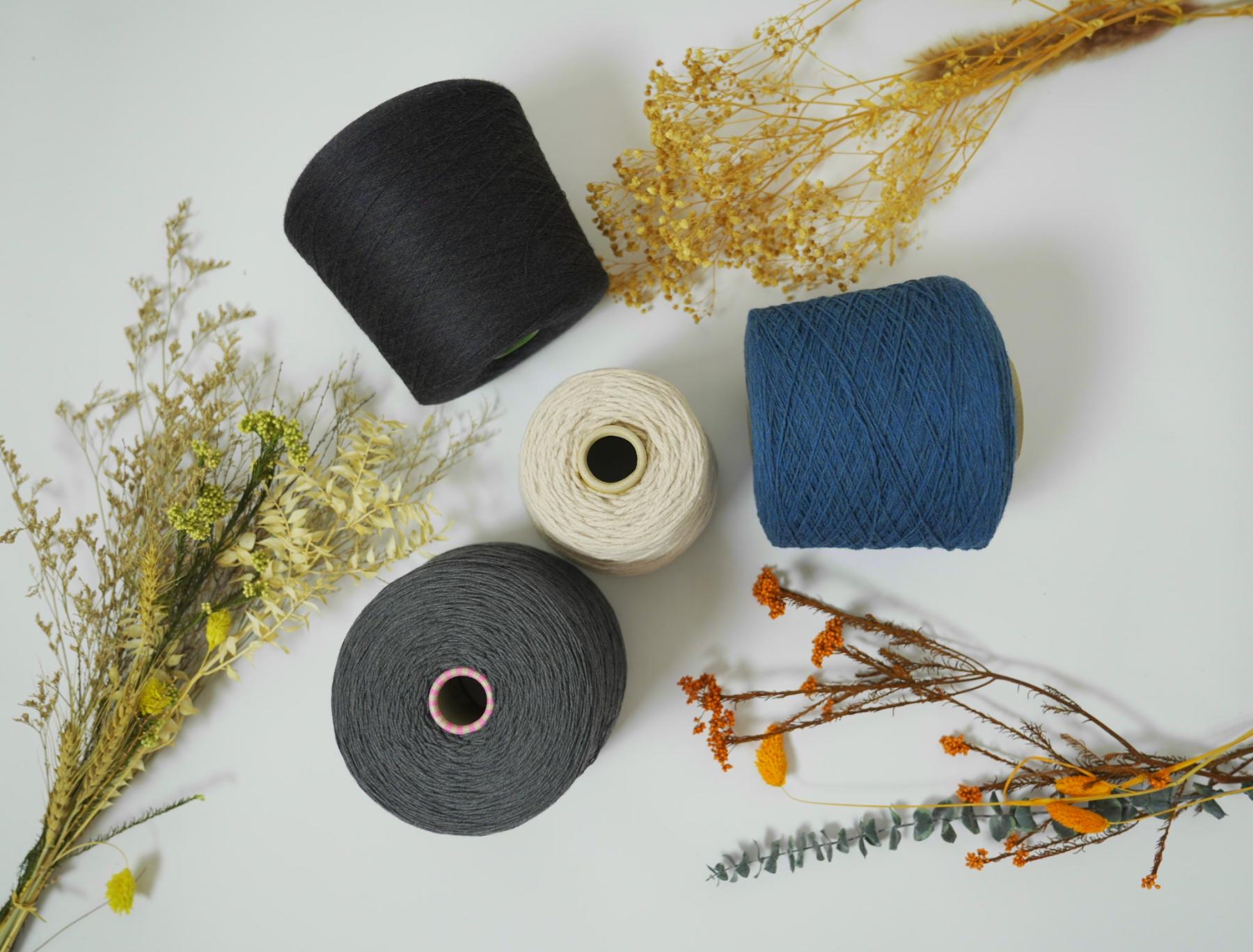
A knitting pattern may name a specific yarn, but that does not mean it is the only yarn that will work. If you have found a beautiful deadstock yarn on a cone—or want a more affordable alternative—you can substitute it confidently by comparing the qualities that actually shape the finished fabric.
The key is to look beyond labels such as “fingering” or “DK.” Match the yarn’s length, fibre, construction and behaviour, then confirm your choice with a washed swatch. This guide walks you through the process step by step.
1. Start with metres per 100g
Yarn-weight names are useful shorthand, but they are not perfectly standard. Two yarns described as fingering weight can produce noticeably different fabrics. Metres per 100g gives you a more useful starting point because it compares length and weight directly.
Find the original yarn’s total length and weight, then convert it to metres per 100g:
Metres per 100g = total metres ÷ total grams × 100
For example, a 50g ball containing 200 metres equals 400 metres per 100g. A cone yarn close to that figure is a sensible candidate, although fibre and construction still matter.
If your cone is much finer, you may be able to hold two or more strands together to reach the required weight.
2. Compare fibre content and fabric character
A mathematical match is only the beginning. Fibre determines how the garment drapes, stretches, retains warmth and recovers after wear.
- Wool offers elasticity, warmth and reliable stitch definition.
- Cashmere adds softness, warmth and a gentle halo, but can create a more relaxed fabric.
- Alpaca is warm and fluid with less natural recovery than wool.
- Cotton, linen and silk can feel cooler and drape beautifully, but usually behave very differently from elastic wool.
- Blends combine characteristics, so consider what each fibre contributes.
You do not always need to reproduce the original fibre exactly. Instead, decide whether the design depends on structure, drape, warmth, softness or elasticity. A fitted ribbed sweater needs good recovery; an airy summer top may benefit from a cooler, more fluid yarn.
3. Look at the yarn’s construction
Construction changes how a yarn fills the stitches. A smooth, tightly plied yarn may give crisp cables and texture. A softly spun or brushed yarn can bloom after washing and create a lighter, hazier fabric. Several fine strands held together may match the original metres per 100g while still producing a different surface.
This is especially important with industrial cone yarn. The yarn may feel firm before washing because of spinning oil, then soften and bloom considerably once washed. If the cone label uses an Nm count or unfamiliar abbreviations, see our guide to working with deadstock cone yarn.
4. Calculate how much yarn you need
Use length—not the number of balls—to calculate your quantity. If the pattern calls for ten 50g balls with 200 metres each, the total requirement is 2,000 metres. Add a sensible margin, particularly if you are changing fibre, adjusting the length or combining strands.
When holding two strands together, remember that both strands are consumed at the same time. To knit 1,500 metres of fabric with two strands held together, you need approximately 3,000 metres of the fine yarn in total.
Our Yarn Substitution Calculator can help you compare yarns and estimate the quantity required.
5. Make a generous swatch—and wash it
The swatch is where a possible substitute becomes a reliable choice. Knit a sample larger than the small area you intend to measure, using the pattern’s stitch and more than one needle size if necessary.
- Measure the unwashed gauge.
- Wash the swatch as you plan to wash the finished garment.
- Let it dry completely without stretching it unnaturally.
- Measure the gauge again.
- Check the fabric in your hands: its drape, opacity, softness, recovery and weight.
Gauge tells you whether the garment will have the intended dimensions. The feel of the swatch tells you whether you will enjoy wearing it. Both matter.
A practical substitution checklist
- Calculate the original yarn’s metres per 100g.
- Choose a cone yarn with a similar figure, or combine fine strands.
- Compare fibre content and the qualities needed by the design.
- Consider spin, ply, halo and expected bloom after washing.
- Calculate the total metres required, including all held strands.
- Buy enough from the same deadstock lot when possible.
- Knit and wash a generous swatch before starting the garment.
Common yarn-substitution mistakes
The most common mistake is choosing by appearance alone. Colour and softness may be perfect, but a yarn with very different density or elasticity can change the fit. It is also easy to compare the price of one cone with one ball instead of comparing the full quantity needed for the project.
Finally, do not skip washing the swatch. Cone yarn can transform after its first wash, and that transformation is part of the yarn—not a problem with it.
Choose the fabric, not just the label
A successful substitution does not have to copy the original yarn perfectly. It needs to create a fabric that works for the design and for the way you want to wear it. By comparing measurable details and testing the result, you can use beautiful deadstock cone yarn in far more patterns—with less guesswork and often much better value.
Watch: Affordable yarn swaps for popular patterns
Ready to find a yarn for your next project? Browse our current deadstock cone yarns.